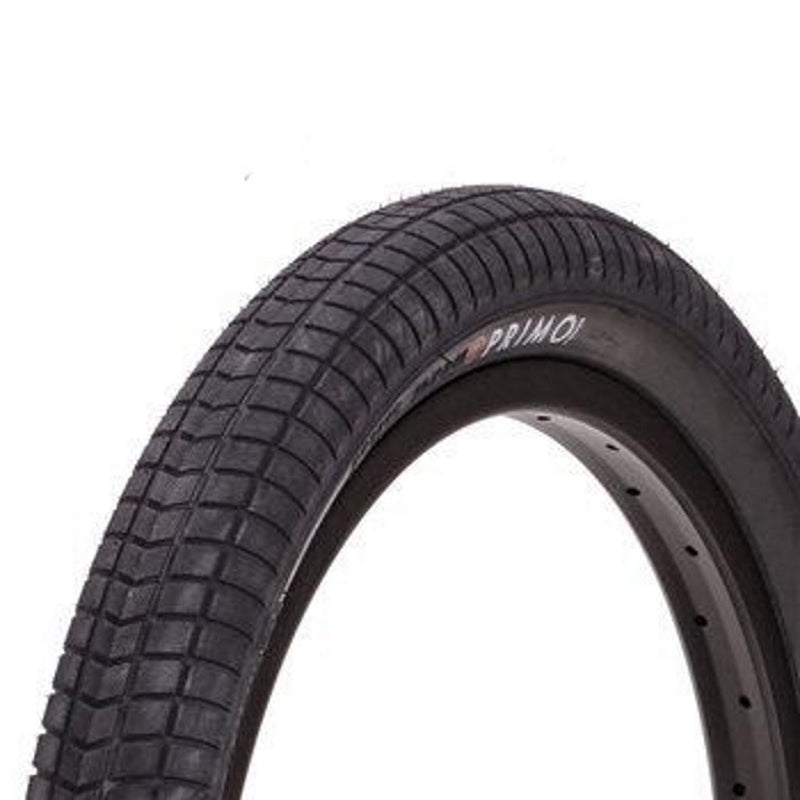
What BMX tyre width and pressure should I run?
Everything you need to choose BMX tyres: widths, tread patterns, typical tyre pressures for park, street and trails, beads and tubes.
Tyres are one of the cheapest upgrades you can make to a BMX, and one of the most noticeable. The right width, tread and pressure can make your bike feel faster, grippier and more forgiving on landings. Here's what to look for.
BMX tyre sizes
Tyres are listed by wheel diameter and width, for example 20" x 2.40". Make sure the diameter matches your wheels (12", 14", 16", 18", 20" and so on). For 20" freestyle tyres, widths typically run from about 1.95" up to 2.5".
Choosing a width
- Narrower (around 1.95" – 2.2"): lighter and faster rolling, with less to catch on grinds. Popular with park riders and for front tyres.
- Mid (around 2.25" – 2.35"): a good all-round balance.
- Wider (around 2.4" – 2.5"): more air volume, so more cushioning, more grip and more forgiving landings. Popular with street riders and anyone who likes a softer feel.
Check your frame and fork clearance before going wide. Some frames list a maximum. Kink, for example, says the Williams frame fits up to 2.5" tyres. Many riders run a narrower tyre up front and a wider one at the back, or the other way round.
Tread patterns
- Smooth or slick centre: low rolling resistance, fast on concrete and in parks. The S&M Speedball, for example, has a smooth unbroken centre strip.
- Knurled or file tread: fine texture for grip on smooth surfaces. A favourite for street and park.
- Directional or "V" tread: grip in a straight line. The Primo V-Monster Tyre 20" - All black 2.40" uses a knurled directional V pattern.
- Knobby: for dirt and trails. FIT says its FAF Trail Knobby is used for dirt and street, front and rear.
Tyre pressure (PSI)
Pressure changes how a tyre feels more than almost anything else. As a rough guide:
| Riding | Typical pressure | Why |
|---|---|---|
| Park and ramps | Higher (around 60 – 80+ PSI) | Faster rolling, holds speed on transition |
| Street | Medium (around 40 – 65 PSI) | Some cushion for drops and landings |
| Dirt and trails | Lower to medium (around 35 – 55 PSI) | More grip on loose surfaces |
Lighter riders can usually run lower pressures than heavier riders. Too low and you'll risk pinch flats ("snakebites"); too high and the bike can feel skittish.
Most important of all: never go over the maximum pressure printed on the tyre's sidewall. These vary a lot. Federal's Command LP, for example, is a low pressure tyre rated to 60 PSI maximum, while many others are rated to 100 or 110 PSI. A pump with a gauge, like the United Mini Track Pump (which goes up to 140 PSI), takes the guesswork out.
Some tyres we stock compared
All figures are from the product pages (maximum pressure as listed).
| Tyre | Width | Max pressure | Notes |
|---|---|---|---|
| Federal Command LP Tyre 20" - Black 2.40" | 2.40" | 60 PSI | Low pressure street tyre, knurled pattern |
| Tall Order Wallride Tyre 20" - Black 2.35" | 2.35" | 100 PSI | All-round compound, comfortable on trails |
| Cult Vans Tyre 20" - Classic Gum 2.40" | 2.40" | 110 PSI | High pressure sidewalls, waffle tread |
| Maxxis Grifter Tyre - Black 20" x 2.10" | 2.10" | 110 PSI | Fast-rolling freestyle tread |
| Tall Order Reilly Park Tyre 20" - Black 2.10" | 2.10" | n/a | Lightweight park tyre, 450g |
"n/a" means the product page doesn't list a maximum pressure. Check the sidewall.
Puncture and pinch flat protection
If you get a lot of flats, look for a tyre with extra protection. FIT says every FAF tyre comes with a puncture resistant layer, and S&M says the Speedball has a high pressure casing with extra pinch flat protection for street riders who run lower pressures. Running the right pressure for your weight and riding is still the best way to avoid pinch flats.
Front vs rear
Your rear tyre wears much faster than the front, because it does the driving and takes most of the skids. Many riders run a tougher or wider tyre at the back, and something lighter and narrower up front for quicker steering. Rotating the front tyre to the rear when the back wears out is an easy way to get more life out of a pair.
Tyres for kids' bikes
The same rules apply on smaller wheels, but pressures are often lower. Check the sidewall. The Cult Vans 12" and 14" tyres, for example, are 2.20" wide and rated to a 65 PSI maximum. Lower pressures give small riders more grip and comfort.
Steel or Kevlar bead?
Most BMX tyres have a steel (wire) bead, which is tough and affordable. Some come with a Kevlar or folding bead, which is lighter and can be folded for storage. The Cult Vans Kevlar Bead tyre, for example, is listed with a lightweight folding bead.
Inner tubes
Match the tube to your tyre size, and replace it if it's patched up more than a couple of times. We also stock lightweight TPU tubes from RideNow, which are considerably lighter than standard butyl tubes. Browse our Inner Tubes.
When to replace your tyres
- The tread is worn flat or you can see the casing.
- Cuts or bulges in the sidewall.
- Repeated flats from the same tyre.
FAQs
Where can I buy BMX tyres in the UK?
We stock 20" BMX tyres and kids' sizes from brands including Cult, S&M, Federal, Tall Order, United, Animal, Merritt and Demolition. See our tyres collection. Tyres usually ship by DPD, and UK delivery is free on orders over £200.
What width BMX tyre should I get?
Most riders run around 2.25" to 2.4". Wider tyres give more grip and cushioning for park and street, and narrower, higher-pressure tyres roll faster on smooth surfaces. Check your frame's tyre clearance before going wide.
Ready to ride?
Browse our full range of BMX tyres. Orders over £200 get free UK delivery, and you can spread the cost with Klarna: pay in 3 interest-free payments at checkout.
18+, UK residents only. Klarna pay in 3 is a form of credit. Missed payments may affect your ability to use Klarna.